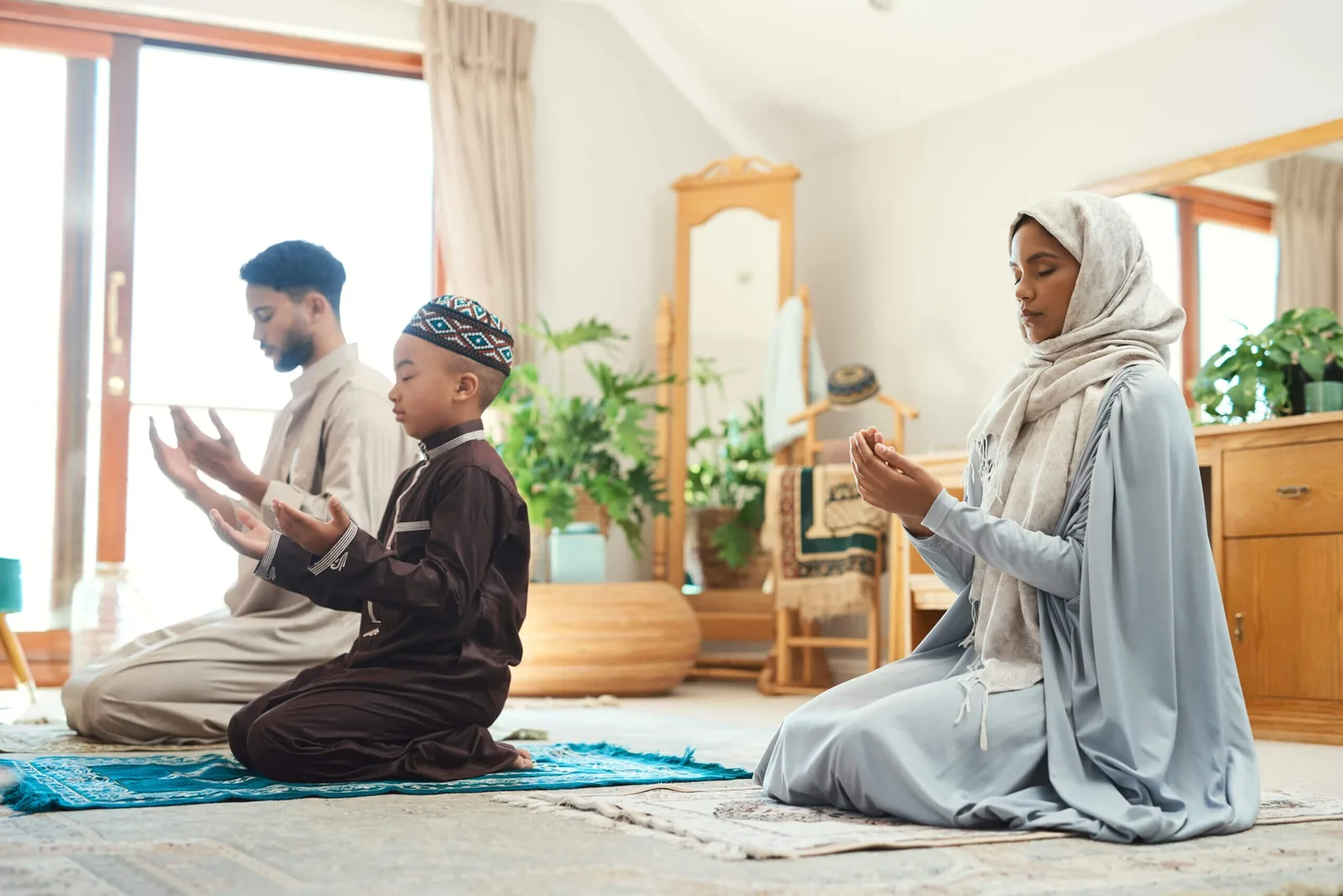
Salah is the Arabic word for the ritual prayer that is offered five times a day in Islamic practice. It is described as one of the five pillars of Islam.
Many families describe it as more than an act of worship. This article looks at how the daily rhythm of prayer is often said to shape discipline.
Prayer and discipline
The day is structured around the call to prayer. People pause what they are doing, prepare and stand in prayer at set times.
Prayer follows a set order of postures: standing, bowing and prostrating. In a congregation, worshippers stand in straight rows and move together, led by one imam. Many people see that shared order as an expression of discipline.
- Salah
- the Islamic ritual prayer, offered five times a day
- Adhan
- the call to prayer, announced at each prayer time
- Imam
- the person who leads a congregational prayer
- Wudu
- the ablution, a washing with water before prayer
How daily prayer is said to build discipline
A steady reminder of purpose
In Islamic teaching, prayer is a way of staying close to God. Families who pray regularly describe it as keeping their values in mind through the day.
In Islamic teaching, regular prayer is described as a restraint against wrongdoing. Many commentators read that as a link between prayer and everyday conduct, including honesty in work and dealings with others.
Body and mind
Regular prayer asks for attention. The postures, the recitation and the stillness give the body and mind a routine to follow.
Many people say that a sense of being mindful of God stays with them after the prayer ends. They describe it as steadying how they act in daily activities.
Cleanliness and humility
Prayer is preceded by wudu, so a person who prays five times a day washes with water five times a day. This is a physical habit of cleanliness.
Islamic teaching also links prayer with humility. Bowing and prostrating are described as a reminder to set aside pride and arrogance.
Punctuality
Each prayer has its own time window. Someone who prays on time learns to stop what they are doing when the time arrives.
Over time, that can build habits of planning and timekeeping. Some people describe that habit as carrying into school, work and family routines.
Reflection and seeking forgiveness
Islamic teaching holds that people make mistakes and that sincere repentance is valued. Prayer gives a regular moment to reflect on the day.
Those who pray regularly often describe it as a time to review their own conduct and to resolve to do better. That habit of honest review is a kind of self-discipline.
In summary
In Islamic practice, daily prayer combines worship with a routine of posture, timing, cleanliness and reflection. Some people describe that routine as supporting discipline in other parts of life.
For households that pray together, the rhythm can also give a shared timetable around meals, study and rest.
Religious questions about prayer can be discussed with a qualified scholar or imam. Afiyah does not give religious rulings.
Sources and dates
Every figure above comes from one of these, read on the date shown. If a source has moved on, the article is reviewed again.