Build, develop or buy business premises.
Finance released in stages as your home or development is built, and finance to buy premises for your business.
At a glance
- Who it suits
- I'm building a home
- I'm developing a small project
- I'm buying premises for my business
- I'm buying business premises through my SMSF
- The steps
- Step 1: Before the first release
- Step 2: A stage is reached
- Step 3: The stage is checked
- Step 4: Funds are released
- Step 5: The next stage repeats the steps
- Step 6: Completion and the exit
- Who you deal with
Your finance specialist, at Afiyah Capital Pty Ltd, credit representative number 577318.
Where does a build or development start?
Four common starting points. If yours is different, say so in your enquiry.
Finance to build a home you will live in can be regulated consumer credit. Finance to develop property for sale, or to buy business premises, is business finance.
- I'm building a homeYou have a site and plans, or a quote from a builder. See how funds are released as each stage is finished.
- I'm developing a small projectA duplex, a few townhouses or a small subdivision. See what a lender looks at before it funds a project.
- I'm buying premises for my businessAn office, a shop or a warehouse that your business will use. A lender looks at the property and at the business.
- I'm buying business premises through my SMSFBuying premises through an SMSF has its own rules, set out on its own page.
Construction finance in stages: what happens when
A drawdown is when the lender pays out the finance in steps, not in one amount. Each lender sets its own stages and checks, so ask for the schedule.
Step 1: Before the first release
A lender may ask to see the plans, the permits, the building contract and the budget. It may ask for your own share of the cost to go in first.
Step 2: A stage is reached
The builder finishes a stage set out in the building contract, such as the base, the frame, lock-up or fixing. Lock-up means the outer walls, roof, floor, doors and windows are in. Fixing means the inside fit-out is done.
Step 3: The stage is checked
The lender may inspect the work, or ask for a valuation or a surveyor's sign-off, before it releases funds. Check the work yourself too.
Step 4: Funds are released
The lender releases the amount set for that stage. Ask who receives it and how long it takes.
Step 5: The next stage repeats the steps
The amount released so far grows with each stage. Ask whether your payments follow the whole amount or only the amount released so far.
Step 6: Completion and the exit
When the project ends, the building phase of the finance ends too. The exit is how the finance is paid back, such as a sale or a refinance. Your contract sets out how and when.
Ask the lender for these
- The release schedule
- Which stages, and how much is released at each
- The checks
- Who inspects, and what they look for
- The timing
- How long a release takes once a stage is done
- Any fee
- Whether a fee applies at each release
- A late stage
- What happens if a stage runs late, and who covers the gap
For a home build, Consumer Affairs Victoria names four stages: base, frame, lock-up and fixing. It says to check that the work is complete and has passed inspection before each progress payment. Rules differ by state, and your contract and your lender set your own stages.
Sources, read on 18 October 2026:
Consumer Affairs Victoria: Deposits and payments for building work (updated 1 July 2026)
Consumer Affairs Victoria: Paying for building work, checklist (updated 2 July 2025)
Want your own stages worked through? Tell us about your project and your Afiyah team will reply.
What is different for a project
A lender will want to see your costs, timeline and exit plan.
A lender may check each stage before it releases funds. Ask yours how.
See every step, from enquiry to settlement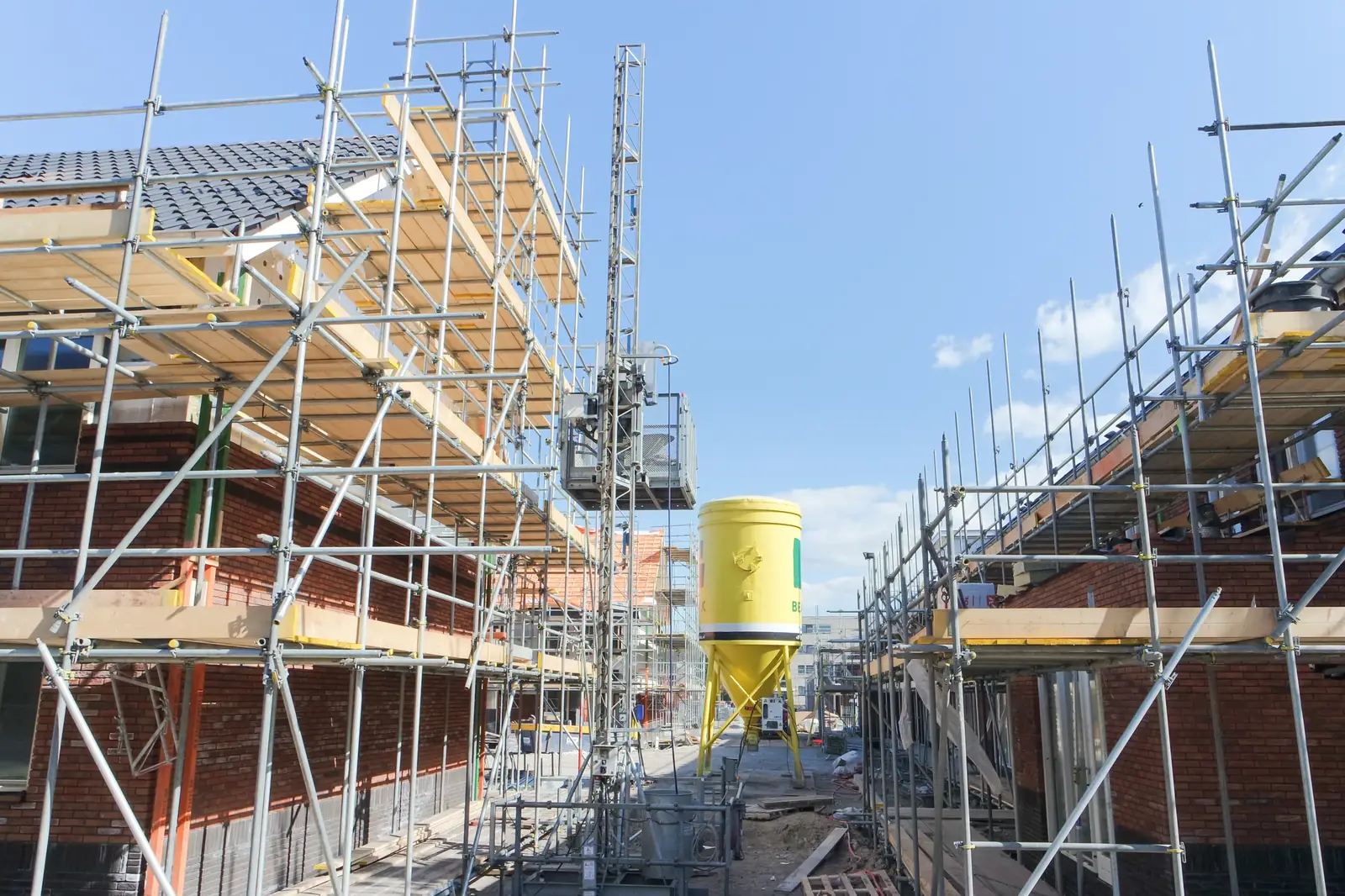


Costs
What do I pay on a project?
You pay a rental or profit rate instead of interest. How that works is explained on the Islamic home finance page.
Costs to plan for on a project
- The land and stamp duty
- If you are buying the site
- The building contract
- The price, plus any variations
- Design, permits and council fees
- Plans, certifiers and the council
- Valuations and inspections
- Ask who pays, and whether a fee applies at each release
- Insurance and legal fees
- Cover for the works and for the site
- Payments while you build
- Ask whether they follow the amount released so far
- A buffer
- Money set aside for cost rises and delays
Common questions
What can the finance be used for?
Examples are building a home, a duplex, a few townhouses or a small subdivision, or buying premises for your business. We confirm what suits your project.
How are funds released in stages?
A lender releases money as the project reaches stages set out in the building contract, usually after it checks the work. Each lender sets its own stages and checks. Ask for the schedule, the timing and any fees in writing before you commit.
How much of the cost do I need to put in?
Each lender sets its own requirement. Ask each lender for its requirement. Equity in a property you own can help, but it adds to what you owe.
Is this finance regulated like home finance?
It depends on the purpose. Finance to build a home you will live in can be regulated consumer credit. Development and commercial finance is not consumer credit, and other laws still apply.
What can Afiyah help with on a development or commercial project?
We help you set out the project and its numbers, and take it to lenders that fund this kind of work. Development and commercial finance is business finance, not consumer credit, so the consumer credit protections and our credit representative authorisation do not cover it. Other laws still apply, and finance to build a home you will live in can be consumer credit, where our Credit Guide and assessment apply.
Keep reading
- Self-employed and business ownersHow your income is assessed and which records to prepare.
- Using your equityEquity from a property you own, and what it adds to your debt.
- What lenders look atHow a lender weighs income, spending and savings.
- Estate and inheritance planningA project can be a large part of your estate. Afiyah Wealth plans who receives what.
The detail, before you decide
What lenders look at, the costs, the contract, the documents and the risks.
Development finance: what lenders look forThe areas a lender may look at
Each lender has its own policy, and the decision is the lender's. These are the areas a lender may look at.
Your plan and budget
Scope, timeline and cost, with the plans and permits. A lender may ask for a feasibility, which is your own test of costs, timeline and sale price. It may want the numbers tested against higher costs, a later finish and a lower sale price. It may also want a buffer.
The site and its value
A valuation of the site, and of what the finished project may be worth. The lender may arrange its own valuation.
Your contribution
The savings or equity you put into the project. Ask for the figure.
Your finances
Your income, assets, debts and spending, and the accounts of any company or trust that holds the project.
Experience and the builder
Your experience with similar projects, and the builder's licence, insurance and track record.
The exit
How the finance will be paid back when the project ends. For example, by selling the finished properties or refinancing to longer-term finance.
Buying premises for your business: the finance explainedPremises that already stand, bought at settlement
Premises that already stand are bought with one payment at settlement, not in stages. The lender looks at the property and at the business that will use it.
The property
The type of property, where it is, how it is zoned and what state it is in. A lender may want a valuation.
The business
The business's accounts, income and commitments, and how it will meet the payments.
How the premises will be used
Your business may use the premises, or you may rent them to a tenant. A lender can treat the two differently.
How is the finance put together?A side-by-side and a contract checklist
Finance for a project can be structured to avoid interest (riba). It can be built on a lease, a sale paid over time or shared ownership. In a lease (Ijarah), you pay rent to use a property the financier owns. How and when ownership passes to you is set by the legal documents.
How a provider applies a structure to a build, a development or premises depends on the provider and the legal documents. Ask for the documents before you decide whether to proceed.
| Question | Conventional development finance | Islamic development finance |
|---|---|---|
| What the funder does | Provides the money for the project, usually in stages. | Funds the project through a lease, a sale paid over time or shared ownership. The product sets out which. |
| How the funder is paid | Interest on what you owe, plus fees. | Rent, part of a purchase price or a profit margin, plus fees, depending on the structure. |
| What your payments are | Interest, which may be charged on the amount released so far. The finance contract sets this out. | Set by the product. Ask whether they follow the amount released so far. |
| What it costs in total | Interest and fees over the whole term. Ask for the total. | Rent or profit, plus fees, over the whole term. Ask for the total. |
| What to compare first | The rate, the payments, the total cost and the term. | The rate, the payments, the total cost, the structure, who owns what and when ownership passes to you. |
The exact structure, payment terms and ownership pathway depend on the product, the funder and the legal documents.
| Topic | What to read for |
|---|---|
| Title and security | Who is on the title during the build, and who holds security over the site and the works. |
| Stage releases | What triggers each release, who checks the work and how long a release takes. |
| Your payments | How they are set, whether they change as funds are released and how often they are reviewed. |
| Insurance | Who arranges and pays for insurance on the works and the site, and whose name is on the policy. |
| Repairs and upkeep | Who pays for repairs and upkeep during the term, and who deals with building defects. |
| Cost rises | Who pays if the cost goes over budget, and whether the facility can be increased. |
| Delays | What happens if a stage runs late or the project runs past its end date, and any fees. |
| Missed payments | The steps that follow, any fees and where a late charge goes. |
| Paying out early | What it costs, and how you pay out by selling or refinancing. |
| The end of the term | How and when ownership passes to you, and any costs or duty at that point. |
What documents do I need?The usual documents, and whose call it is
Each lender sets its own list and may ask for more. Gathering these is not an application.
Usual items
- Your plan
- Scope, timeline and budget
- Plans and permits
- The plans, and the permit status
- Building contract or quotes
- The price, the stages and the builder
- A feasibility
- Costs, timeline and the expected sale price or rentif you have one
- A site valuation
- A recent valuation of the land or propertyif you have one
- Proof of your finances
- Income, assets, debts and recent statements
- Company or trust documents
- For the entity that holds the projectif it applies
- Proof of your contribution
- Savings or equity, with statements
- Your experience
- Past projects, or your builder's track record
- Photo ID
- A licence or passport
We look at the project and your finances.
A small developer with a permit and some equityA made-up project talked through, with no figures
An example (illustrative, fictional)
A made-up example of how a staged project can be talked through. It uses no figures.
Sam's situation
Sam is a small developer. Sam has a site, a permit for three townhouses and some equity to put into the project. Sam wants to see how staged funding would work before going further.
What a lender may look at
The lender may look at the plans, the permit, the building contract and the budget. It may want a valuation of the site, and to see Sam's finances. It may ask how Sam tested the numbers, and for a buffer. It may also ask how the finance will be repaid when the townhouses are finished.
What Sam can do first
Ask the lender for the release schedule, the checks and any fees. Plan a buffer for cost rises and delays. Ask an accountant how to hold the project and what tax follows. The lender makes the decision.
Made up to show how a project can be talked through. It is not a prediction of any result.
What are the risks?Benefits and risks, side by side
A project can run over budget, finish late or be valued below your plan, and it can result in loss. Here is what to weigh.
Benefits and risks side by side: What you may want · What to weigh against it
Funds released as the work is done
A release can depend on a check by the lender. A delay at one stage can hold up the next, and you may need cash to cover the gap.
A budget and a timeline you can plan around
Costs can rise and builds can run late. Someone has to cover the difference, so plan a buffer.
A finished project worth more than it cost
Values can fall. The finished project can be worth less than you expect, which can leave you short when it is time to repay.
Selling the finished properties to repay
Sales can take longer or bring in less than you expect, and your costs carry on until they sell.
Finance structured to avoid interest
You still pay for the finance, through rent or a profit component and fees, and your payments can change over time.
Using land or a property you own as security
If the project cannot repay the finance, you could lose the property that secures it.
Whether to develop at all is a question for an authorised adviser. Afiyah Wealth plans the wider picture: your estate, your retirement and your family cover. How to hold the project and the tax that follows are questions for a registered tax agent and a solicitor.
Build what you have planned.
Tell us your plan, budget and timeline. A person from our team reads your enquiry and replies.