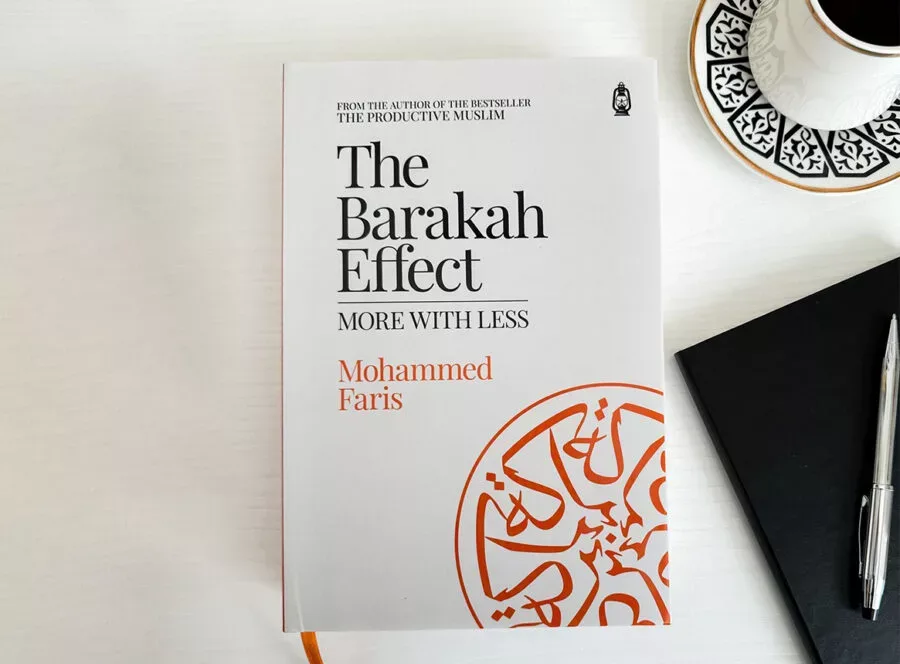
A team member at Afiyah read The Barakah Effect by Mohammed Faris and listened to a podcast with the author. This is a reflection on what stood out.
The book asks whether productivity is only about getting more done, or also about living in line with a sense of purpose. The ideas below are the reader’s takeaways, not a review of the whole book.
- Barakah
- an Arabic word for blessing or increase, used to describe a small effort that yields lasting benefit
- Fajr
- the dawn prayer, the first of the five daily prayers in Islamic practice
- Dua
- a personal supplication or prayer
The problem with hustle culture
Hustle culture says that the harder you work, the more successful you will be. The reader found this familiar: early meetings, late nights and personal practices pushed aside.
The book describes this model as a flawed one. It says it can leave people drained, with little to show beyond material success.
In its place the author sets out what he calls a barakah culture. It aims for work that is purposeful, centred on faith and sustainable, with spiritual and emotional wellbeing as central as professional goals.
Starting small: anchoring the day
One practical idea is to begin with small, steady changes. The book suggests building the day around Fajr and using the early morning for practices that enrich the reader spiritually.
The reader tried waking earlier, praying Fajr with focus and reading a few minutes of the Quran before starting work. On those days the rest of the day felt more settled.
This is one person’s experience. Habits suit people differently, and the book does not promise a result.
Recognising your purpose
The author encourages readers to ask what they are ultimately working towards. In Islamic teaching, people are described as stewards of what they have been given, contributing to the world in ways that reflect their values.
For readers unsure of their purpose, he suggests starting with skills and interests. What do you do well, and how can it serve others?
Building intention into everyday tasks
A central idea is intention. In Islamic teaching, an ordinary task can become an act of worship when it is done with the right intention.
The reader now pauses before drafting an email or joining a meeting to recall why the work matters: serving others and working with integrity.
The book also speaks of a hierarchy of intentions. Financial goals and personal satisfaction may motivate people, but they sit below the highest purpose of seeking God’s pleasure. The reader found that this made routine tasks feel more meaningful.
Sustaining productivity without burnout
Many people struggle to keep momentum. The author observes that large changes rarely last. He suggests committing to one or two habits for a month.
For the reader, that meant praying all five daily prayers on time and taking short breaks during long workdays.
Short rests were the surprise. They first felt like lost time. The book presents rest as part of sustaining energy and focus, not as a weakness.
The takeaways, in the reader’s words:
- One or two habits, rather than a full overhaul.
- Prayer times and breaks kept in the diary like any other commitment.
- Rest and exercise treated as part of the working day.
Bringing barakah into the workplace
The book also considers teams and organisations. Simple practices can change how a workplace feels. Examples are opening a meeting with a short dua or making room for respectful conversation.
Transparency, respect for colleagues and thoughtful decisions are the kind of small, steady actions that build trust over time.
A journey, not a destination
The reader’s main lesson was that productivity is less about doing more and more about doing what matters, with sincerity and purpose.
The book’s message, as the reader understood it, is that success lies in the sincerity of the effort rather than in the outcome.
Sources and dates
Every figure above comes from one of these, read on the date shown. If a source has moved on, the article is reviewed again.